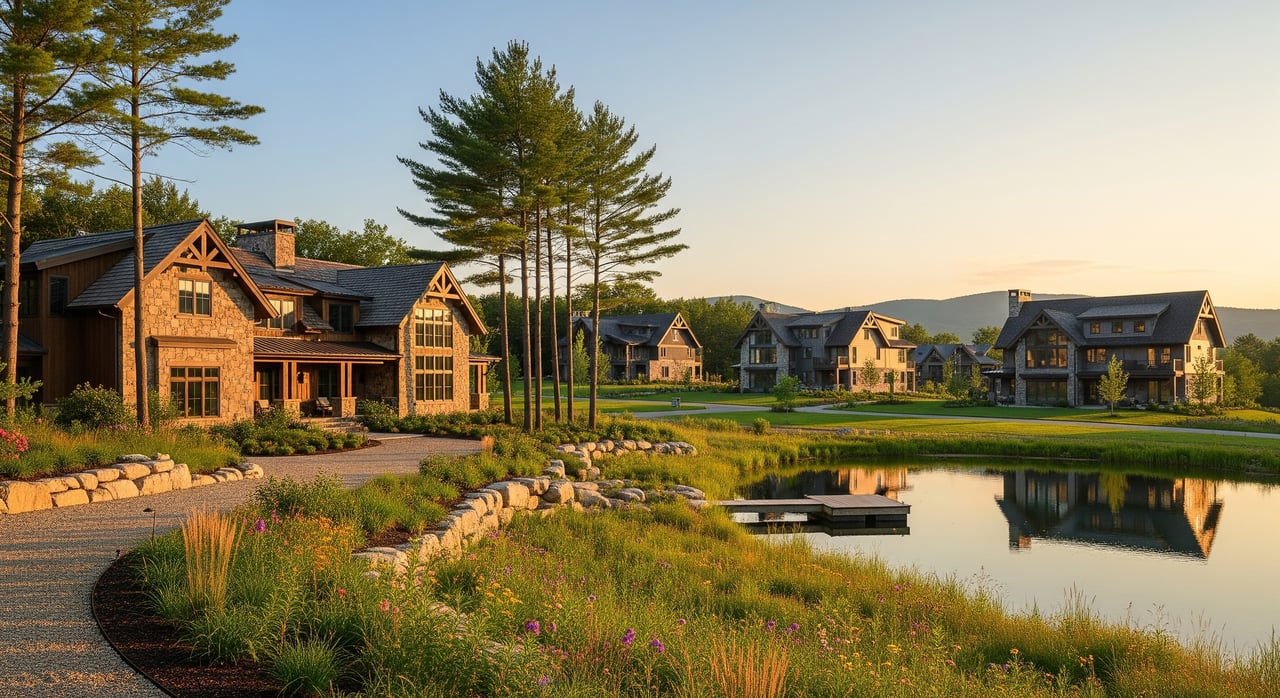
Choosing between an HOA community home and a non-HOA property in the Pocono Mountains can feel like two completely different lifestyles. One path offers structure, amenities, and shared maintenance. The other offers freedom, privacy, and fewer rules — but also more responsibility.
If you’re buying a primary residence, a weekend escape, or an investment property, the right choice comes down to your personal balance of cost, control, and convenience.
In this guide, you’ll learn how fees, rules, amenities, maintenance, financing, and resale differ across Pocono communities and non-HOA areas — so you can buy with confidence.
POCONO HOA VS. NON-HOA: THE BASICS
The Pocono Mountains region attracts full-time residents, retirees, weekenders, and buyers from NYC, Northern New Jersey, and the Philadelphia area. You’ll find everything from cabins and chalets to townhomes, condos, and full-service planned communities.
WHAT AN HOA HOME USUALLY MEANS
An HOA (Homeowners Association) manages shared property and enforces rules meant to protect appearance, safety, and overall neighborhood standards. In many Pocono communities, HOAs also provide amenities and services that can make second-home ownership easier.
WHAT A NON-HOA HOME USUALLY MEANS
A non-HOA home has no private association rules. You still follow township codes and zoning — but you typically have more flexibility in how you use, modify, and manage the property.
BOTTOM LINE:
HOA properties = more structure and shared services.
Non-HOA properties = more control and independence.
FEES AND BUDGET PLANNING: WHAT YOU REALLY PAY
HOA FEES
HOA dues may be paid monthly, quarterly, or annually. Costs vary widely based on services and amenities.
Fees may include:
-
road maintenance (especially private roads)
-
snow removal
-
common area landscaping
-
pools, lakes, fitness centers, ski areas (community-dependent)
-
management and administration
-
reserve funds for major repairs
-
insurance for shared areas
WATCH OUT FOR “EXTRA” HOA COSTS
Beyond regular dues, you may also face:
-
transfer / resale fees at closing
-
estoppel fees
-
fines for rule violations
-
late-payment penalties
-
special assessments (large one-time charges for big repairs)
KEY DUE DILIGENCE:
Ask for the HOA’s budget, reserve fund status, recent increases, and delinquency rate. Weak reserves or high delinquency often mean future assessments.
NON-HOA COSTS
Non-HOA homes don’t have dues — but you pay for everything directly:
-
snow removal (driveway + access)
-
landscaping and tree work
-
road/driveway upkeep
-
repairs and system maintenance
Non-HOA can feel “cheaper,” but it’s not automatically cheaper — it’s just less predictable.
AMENITIES AND LIFESTYLE: CONVENIENCE VS. PRIVACY
HOA LIFESTYLE
HOA communities can offer a “resort-like” setup, which is especially attractive for:
-
weekend use
-
second-home buyers
-
families with kids
-
people who want activities built in
Typical amenities (community-dependent):
-
indoor/outdoor pools
-
lakes and beaches
-
fitness centers
-
sports courts
-
playgrounds
-
ski areas
-
clubhouses and restaurants
NON-HOA LIFESTYLE
Non-HOA homes often offer:
-
more privacy
-
fewer restrictions
-
more freedom to modify the exterior
-
more flexibility with storage and parking (within local ordinances)
TRADEOFF:
You won’t have shared amenities unless you build them or pay privately (memberships, private clubs, etc.).
MAINTENANCE AND SEASONAL REALITIES IN THE POCONOS
The Pocono climate matters. Winters are real, and maintenance is not optional.
IN HOA COMMUNITIES
Depending on the property type:
-
condos/townhomes often cover exterior elements (varies by association)
-
communities may plow common roads
-
some offer landscaping or common area upkeep
-
you still usually maintain your own home (especially single-family)
IN NON-HOA SETTINGS
You’re fully responsible for:
-
driveway snow removal
-
winterization when vacant
-
protecting pipes from freezing
-
monitoring storms and outages
-
coordinating vendors
IF YOU’RE AN ABSENTEE OWNER, HOA services can be a major advantage — but only if the HOA is well-run.
RULES AND FLEXIBILITY: WHAT YOU CAN AND CAN’T DO
HOA RULES
HOAs enforce CC&Rs, bylaws, and architectural guidelines. Typical restrictions include:
-
paint colors and exterior materials
-
fencing rules
-
parking limits
-
noise rules
-
pets (sometimes)
-
vehicle storage (trailers, boats, RVs)
-
short-term rental limits
Penalties can include fines and, in severe cases, liens.
NON-HOA FREEDOM
No private rules — but you still follow:
-
township zoning
-
building codes
-
permits
-
deed restrictions (sometimes)
If you want to renovate freely or avoid approvals, non-HOA is usually easier.
FINANCING, INSURANCE, AND RESALE DIFFERENCES
RESALE
A strong HOA community can improve resale if it offers:
-
good upkeep
-
desirable amenities
-
stable finances
But high fees, restrictions, or poor management can reduce demand.
FINANCING
Condo and townhome purchases can require additional lender review. Some loan programs have stricter standards for condo projects.
Non-HOA financing focuses more on the property itself, comps, and condition.
INSURANCE
-
condos often require HO-6 coverage for the interior + personal property
-
HOAs may carry a master policy for shared elements (you must verify what it covers)
-
single-family homes require standard homeowners insurance; confirm whether the HOA covers anything related to roads/common infrastructure
WHO BENEFITS MOST FROM HOA VS. NON-HOA?
WEEKENDERS / SECOND-HOME BUYERS
Best fit often: HOA, because it can include snow removal and oversight.
But always confirm winter services, emergency response, and rental rules.
PRIMARY RESIDENCE FAMILIES
HOAs can provide structure, maintained amenities, and standards that keep the neighborhood stable.
But you must be comfortable living under rules.
RETIREES / LOW-MAINTENANCE SEEKERS
HOA communities can simplify life if services are consistent and reserves are strong.
INVESTORS / STR BUYERS
This is where people get burned.
STR rules vary by township AND by HOA.
Some communities allow STRs, some limit them, and some prohibit them entirely.
Never assume — verify policies in writing.
DUE DILIGENCE CHECKLIST
IF YOU’RE CONSIDERING AN HOA HOME
-
CC&Rs, bylaws, rules, architectural guidelines
-
current budget + reserve fund status
-
reserve study (if available)
-
board meeting minutes (12–24 months)
-
history of special assessments
-
fee schedule + planned increases
-
delinquency rate and collection practices
-
management contract + key vendor contracts
-
master insurance declarations (what HOA covers vs what you must insure)
-
rental policy and application process
-
estoppel letter + any violations tied to the property
IF YOU’RE CONSIDERING A NON-HOA HOME
-
zoning and permitting requirements
-
deed restrictions (if any)
-
STR regulations (township-level)
-
snow removal plan + driveway condition
-
utility easements and access rights
-
parking/road rules if applicable
-
well/septic documentation if relevant
YOUR NEXT STEPS IN THE POCONO MOUNTAINS
If you want convenience, amenities, and shared services, a well-run HOA community can make life easier — especially for second-home owners.
If you want maximum freedom, fewer rules, and more privacy, non-HOA might fit better — as long as you’re prepared to manage maintenance and seasonal needs.
The right choice depends on your lifestyle, your tolerance for rules, and how involved you want to be in property upkeep.
If you want help comparing specific communities and properties, the team at Saw Creek Real Estate, LLC can guide you through tours, HOA document review, and the reality behind the fees and rules.
FAQS
HOW MUCH ARE HOA FEES IN THE POCONO MOUNTAINS?
HOA fees vary widely by community and amenities. Always review the specific HOA budget, fee schedule, and any planned assessments.
CAN I USE AN HOA HOME FOR SHORT-TERM RENTALS?
Sometimes yes, sometimes no. Rules depend on the community and local township regulations. Confirm rental policies in writing before relying on STR income.
WHO HANDLES EXTERIOR MAINTENANCE IN A CONDO VS. SINGLE-FAMILY HOA?
Condos often cover shared exterior elements; single-family homeowners usually maintain their own exterior while the HOA maintains common areas and roads. Verify the exact responsibilities.
ARE HOAS A GOOD FIT FOR ABSENTEE OR SECOND-HOME OWNERS?
Often yes — especially if snow removal and community oversight are included. But fees and rental rules must be evaluated carefully.
WHAT HAPPENS IF AN HOA HAS LOW RESERVES?
Low reserves can lead to higher dues or special assessments. That’s why financial review is essential before buying.
WILL AN HOA AFFECT MORTGAGE APPROVAL?
It can, especially for condos. Some lenders and loan programs require additional HOA/project review.